- VCE Build Newsletter
- Posts
- VCE Build Weekly Pulse: Issue 05
VCE Build Weekly Pulse: Issue 05
Another exciting week in Civil Engineering Architecture and Construction!

VCE Build
December 14, 2025 • Estimated Reading Time: 7 minutes
🌟 Editor's Note
Welcome to another exciting week in the world of civil engineering, architecture and construction!
Find out what projects are shaping our world.
Every week, we’ll take you inside ambitious projects, unpack technical challenges, spotlight design excellence, and examine the realities of building at scale. This isn’t just about what’s being built — it’s about how, why, and what it means.
Let’s begin at the edge of what’s possible.
Huajiang Grand Canyon Bridge: Engineering at The Edge
Suspended high above one of China’s deepest gorges, the Huajiang Grand Canyon Bridge is a reminder that infrastructure can still feel audacious. Stretching more than 1.4 km across the canyon and rising roughly 625 m above the river below, the bridge is now the world’s highest, transforming a once-punishing mountain detour into a two-minute crossing. Design intent: The project set out to do more than connect roads. Planners aimed to unlock economic growth in Guizhou’s remote interior while creating a landmark structure that could anchor tourism, with viewing decks and pedestrian experiences integrated into the design. Engineering challenges: Building at extreme height meant working with violent canyon winds, fractured karst geology, and limited access for heavy equipment. Cable vibration, deck stability, and worker safety were constant risks, amplified by the sheer drop below. Solutions: Engineers deployed ultra-high-strength suspension cables, advanced wind-resistant deck profiles, and real-time structural health monitoring embedded directly into the steel. Precast segments reduced dangerous on-site work, while staged load testing verified performance before opening. Project milestones: tower foundations carved into rock; towers rising above the canyon rim; main cable spinning and mid-span closure; full-deck installation; final load tests — and finally, a dramatic before-and-after transformation from isolated cliffs to a single, elegant line in the sky. This is megaproject engineering at its boldest. | Tools, Tech and SoftwareLeveraging BIM for Smarter Construction Building Information Modeling (BIM) is no longer just a design tool—it’s a central hub for smarter construction workflows. Platforms like Revit, Tekla, and Archicad allow teams to coordinate complex models, detect clashes early, and integrate scheduling and cost data. Advanced BIM workflows now tie directly into drones and LiDAR scans, creating real-time updates of construction progress. Digital twins extend this further, enabling predictive maintenance and performance monitoring long after handover. For project managers and engineers, the key is not just modeling geometry but connecting BIM to the full project lifecycle, improving collaboration, reducing rework, and delivering projects on time and budget. |
Industry News and Updates
• Government & Approvals: Germany’s construction sector may rebound after a new €500 billion infrastructure investment plan was unveiled, expected to boost civil engineering activity and revenue in 2026 after years of contraction. Reuters
• Project Implementation Challenges: In India’s Karnataka state, only 67 of 1,888 approved projects have progressed — highlighting persistent gaps between approvals and delivery due to complex regulatory processes now being streamlined digitally. The Times of India
• Local Infrastructure Boost: In Australia, a $7.4 million funding approval has enabled the rebuild of Magnetic Island’s Sooning Street Bridge, advancing community resilience and disaster-recovery infrastructure. Courier Mail
• Construction Cost & Productivity: UK construction margins remain squeezed as input costs climb and regulatory gridlock slows approvals, even as infrastructure segments show growth. Construction Wave+1
• Global Market Trends: Reports show Middle East (Qatar) and North Africa (Morocco) construction sectors poised for multi-year growth, backed by infrastructure spending tied to energy, transport, and major events like the 2030 FIFA World Cup. GlobeNewswire+1
Design and Architecture Inspiration
Whe Adaptive Reuse Outperforms New Build
Some of today’s most compelling architecture isn’t rising from empty sites—it’s being carved out of existing structures. Adaptive reuse projects are proving that design excellence and sustainability can align without compromise. Former factories, power stations, and warehouses are being reimagined as cultural venues, offices, and mixed-use hubs, preserving embodied carbon while delivering contemporary performance.
The design challenge lies in contrast. Architects must respect the original structural rhythm—heavy columns, deep floor plates, weathered materials—while inserting light, efficient systems that meet modern codes. The best projects make this tension visible: exposed steel alongside timber additions, original brick framed by high-performance glazing, and services expressed rather than hidden.
Beyond aesthetics, reuse unlocks urban value. Retrofitting reduces construction waste, shortens programme timelines, and anchors new development in local identity. Many award-winning projects now outperform new builds on lifecycle carbon metrics.
The takeaway for designers: the future isn’t always about starting fresh. Sometimes the boldest architectural move is knowing what to keep—and how to transform it.
Engineering Insight and Deep Dive
Why Wind is The Silient Enemy of Long Span Bridges
Wind is one of the most underestimated loads in bridge engineering—not because it’s rare, but because it’s unpredictable. Unlike traffic or self-weight, wind interacts dynamically with a structure, creating forces that can amplify motion rather than resist it. For long-span bridges, this interaction becomes critical.
The problem isn’t just strength; it’s aeroelasticity. Vortices shed from the deck can induce oscillations, while negative aerodynamic damping can trigger flutter—an instability that famously destroyed the Tacoma Narrows Bridge in 1940. As spans grow longer and decks slimmer, susceptibility increases.
Modern solutions focus on shaping and control. Streamlined deck profiles reduce vortex shedding, while tuned mass dampers and cross-ties dissipate energy before oscillations escalate. Wind tunnel testing and computational fluid dynamics are now standard, allowing engineers to simulate extreme conditions long before construction begins.
The lesson is clear: wind rarely causes immediate failure—but if ignored, it can quietly dictate a bridge’s limits. Designing for wind is designing for survival over time.
🔥 Sustainability and Future Infrastructure
Building Climate-Resilient Infrastructure
As climate change accelerates, infrastructure design can no longer ignore extreme weather, rising sea levels, or shifting environmental conditions. Climate-resilient infrastructure—roads, bridges, tunnels, and utilities designed to withstand these challenges—is becoming an essential focus for engineers, planners, and policymakers worldwide. The goal is to create systems that remain safe, functional, and cost-effective under a range of scenarios, reducing long-term repair costs and protecting communities.
Design Strategies: Resilient infrastructure begins with risk-informed planning. Engineers use climate models to anticipate temperature extremes, flood levels, wind forces, and seismic activity. This data informs materials selection, structural geometry, and alignment decisions. For example, bridges in flood-prone areas may include raised decks, reinforced piers, or adaptive spillways, while urban drainage systems are increasingly designed to handle storms of unprecedented intensity.
Material Innovation: Low-carbon concrete, corrosion-resistant steel, and permeable pavements are increasingly integrated into resilient designs. Bio-based materials and modular construction techniques allow for faster replacement and lower embodied carbon, aligning durability with sustainability goals.
Smart and Adaptive Systems: Digital monitoring and IoT sensors provide real-time feedback on structural health, load patterns, and environmental stresses. Bridges, tunnels, and levees can be equipped with automated alert systems that flag potential hazards before failure occurs. Some designs even include adaptive elements—movable barriers or flood gates—that respond dynamically to changing conditions.
Urban Integration: Climate-resilient infrastructure also interacts with urban planning. Roads, transit hubs, and public spaces are designed to absorb shocks while maintaining connectivity. Green infrastructure—parks, wetlands, and vegetated roofs—reduces flooding risk, improves air quality, and enhances thermal comfort, while multimodal transport networks ensure mobility even during extreme events.
Policy and Financing: Governments are increasingly tying funding and approvals to resilience standards. In Europe, North America, and parts of Asia, new codes require infrastructure to withstand 50- to 100-year climate events, incentivizing designs that prioritize long-term safety over short-term cost savings. Insurance and financing models are also beginning to reward resilient designs, recognizing their value in mitigating future losses.
Looking Ahead: Climate-resilient infrastructure is no longer optional; it is a prerequisite for sustainable development. By combining advanced materials, predictive modeling, and adaptive design, engineers can create systems that not only survive climate stressors but thrive in them. The shift toward resilience represents a major evolution in civil engineering—one that demands collaboration, innovation, and foresight to safeguard communities and economies in an increasingly uncertain world.
Career and Professional Development
 | Mastering Your Engineering InterviewPreparation is everything. Research the company’s projects, values, and technology stack, and be ready to discuss how your experience adds value. Focus on STAR answers (Situation, Task, Action, Result) to clearly illustrate problem-solving and leadership skills. Technical questions often test fundamentals—review core concepts relevant to your discipline. Don’t forget soft skills: teamwork, communication, and adaptability matter as much as technical expertise. Finally, have thoughtful questions ready for the interviewer; it demonstrates curiosity and engagement. Pro tip: Bring a portfolio or examples of your work—even digital snapshots—to visually support your answers and leave a lasting impression. |
Construction Site Reality
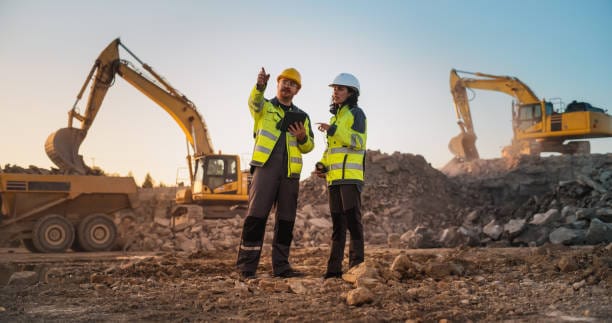
Check out fresh site action from Bengaluru’s massive ₹4,808 cr road and flyover upgrades, with crews tackling multimodal corridors and tunnels ahead of the monsoon push. The Times of India
📸 You only see this on site: chokepoints cleared with night pours, traffic detours micromanaged, and real‑time problem‑solving to keep schedules tight. The Times of India
Also on the global front, aerial progress on Saudi Arabia’s Neom megaproject shows deep excavations and early structure work pushing forward on its ambitious linear city build. New Atlas
These shots remind us that behind every headline there’s grit, grit, and more grit — from logistics puzzles to safety stand‑downs, this is what construction reality looks like today.
Events and Learning
Global Construction Summit 2025: Multi‑day webinars & panels with CPD credits on trends, innovation, and delivery best practices. Global Construction Review
• BuildTech Week 2026: Global construction and building tech conference in Dubai & London featuring smart tech, sustainability, and AI in design. constructionarea.co.uk
• Digital Construction Week 2026: London expo on digital tools, tech demos, and innovation in the built environment. digitalconstructionweek.com
• Sustainable Buildings & Construction Summit 2026: Lausanne gathering on resilient, low‑carbon infrastructure and net‑zero strategies. sustainable-construction.org
• Construction Startup Competition: Contech innovation pitches at Trimble Dimensions and new European events. constructiondive.com
• Scaffolding & Skills Events: InstallerSHOW, UK Construction Week seminars, and National Scaffolding Week for training and safety insights. scaffolding-association.org
• Bharat Navnirmaan Challenge: India’s national engineering competition spotlighting emerging talent. timesofindia.indiatimes.com
Reader Engagement
Share Your Site Stories!
We want to see construction through your eyes. Have a photo from a project you’re working on? A unique challenge you overcame on site? Or a behind-the-scenes moment that most people never see?
Submit your photos, stories, or project highlights and get featured in next month’s issue. Share lessons learned, innovative solutions, or just the grit and creativity that make construction exciting.
📸 Tip: Include a short caption, location, and your role on the project.
Your contributions help inspire and inform the wider engineering community — and your project could be our next hero feature!
Global Projects Map
🌎 South America: Matarani Port Expansion & Peru Mega‑Infrastructure — A $700 million expansion of Peru’s key Matarani copper export port was approved in October 2025, boosting capacity and global trade logistics. The project enhances quays, storage, and handling to support rising mineral exports. Additionally, Peru’s transport authority awarded over US $3.8 billion in new megaproject contracts, including a major Peripheral Road Ring freeway to improve connectivity around Lima and link key economic hubs. These combined developments signal a robust infrastructure push in South America’s Pacific corridor, integrating ports, roads, and rail to support regional growth and trade competitiveness. discoveryalert.com.au
🌍 Europe: Europe’s $134 B hydrogen production hub — transforming energy infrastructure at unprecedented scale. Glass Almanac
🌏 Asia: Yarlung Tsangpo Hydropower Project — China has begun building a massive cascade dam and power complex in Tibet, poised to become the world’s largest hydropower installation. The Guardian
🌍 Europe: Saudi Vision 2030 Giga Projects (Europe influence via investment flows) — while centred in the Middle East, European engineering and finance are instrumental in Riyadh’s multi‑bn infrastructure contracts and technology exports. Knight Frank AE
🌍 Africa: Kenya Mombasa–Interior Highway Expansion — A $1.5 billion road upgrade linking the port of Mombasa to inland regions, boosting trade traffic flow. Reuters
🌎 North America: Ontario Line (Canada) — A $27 billion rapid transit line through Toronto transforming urban mobility. aphex.co
🌏 Oceania: North East Link (Australia) — A$11 billion road project in Victoria, integrating AI for schedule risk mitigation. constructionbriefing.com
Quick Facts & Stats:
Huajiang Grand Canyon Bridge
Height: 625 m above river — taller than the Empire State Building.
Main Span: 1,420 m — one of the world’s longest suspension spans.
Steel Used: 36,000 tons — enough for three Eiffel Towers.
Construction Timeline: Groundworks (Jan 2022) → Tower completion (2024) → Cable spin & deck closure (Aug 2025) → Opening (Sept 2025).
Glass Walkway: 300 m of transparent deck for tourists — extreme engineering meets design.
Cost Efficiency: Approximately $3,200 per meter of main span, remarkable for a bridge of this height and complexity.
Did you know? Engineers installed fiber-optic sensors inside the suspension cables of the Huajiang Grand Canyon Bridge to monitor stress in real-time, making it one of the most high-tech bridges in the world.
Till next time,